
To get rid of ants naturally, start by removing food and moisture sources, then disrupt active trails with a white vinegar spray. Deploy borax sugar bait near the trail to kill the queen and collapse the colony from within. Apply food, grade diatomaceous earth along baseboards and seal all entry points with silicone caulk. Most household infestations resolve within 7–14 days using this combined approach, without a single harsh chemical.
Last summer, my Toronto kitchen became ground zero for a sugar ant takeover after a spilled honey jar. I scrubbed every surface, they kept coming back. That experience sent me deep into natural pest control research, and eventually led me to the same multi-method approach our team at Pest Removal Toronto uses daily: target the colony, not just the trail. This guide is the result of both field experience and that personal kitchen battle.
Whether you are dealing with black ants, sugar ants, or carpenter ants, the principles are the same, understand how pheromone trails work, choose the right remedy for your situation, and pair treatment with prevention for results that last beyond a few days.
Table of Contents
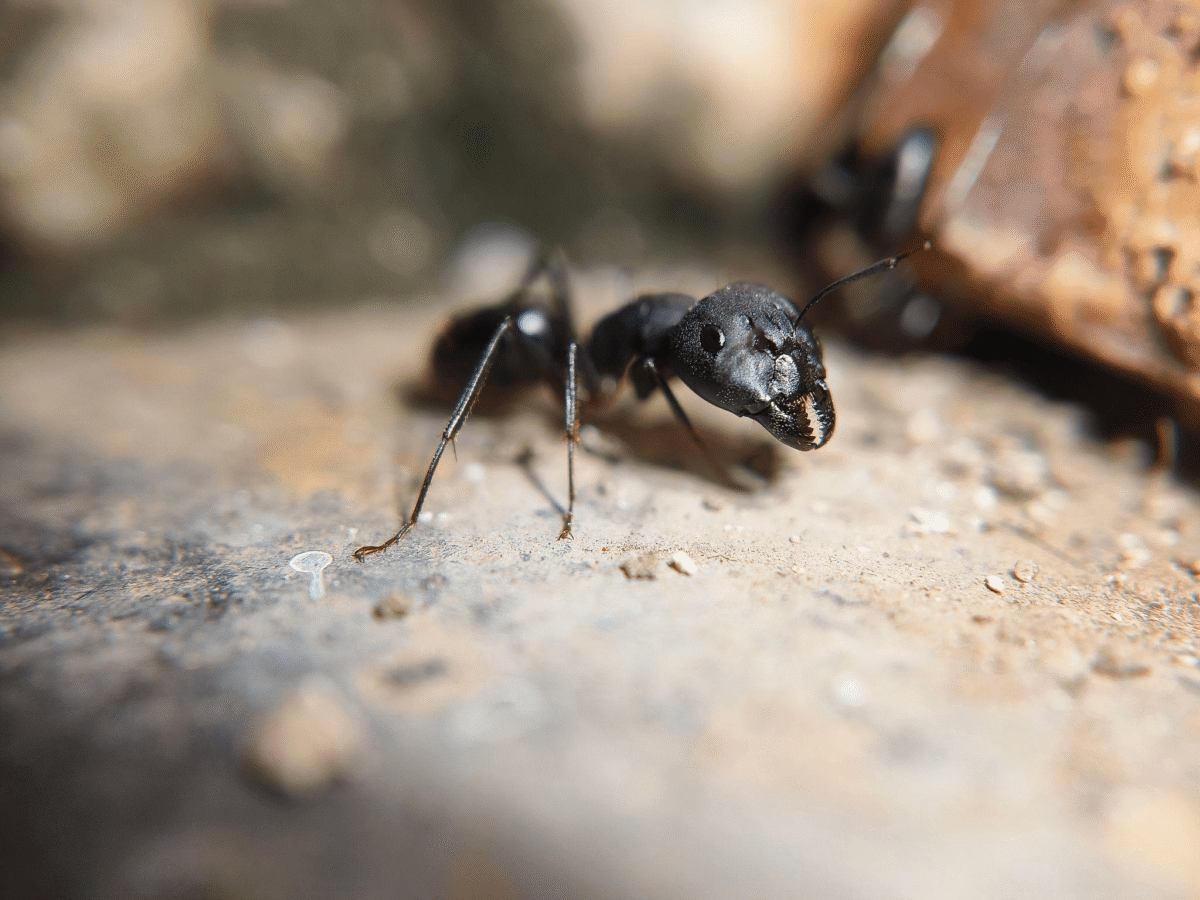
Identifying Common Household Ant Species
Correct identification is the single most important step before treatment. The species determines which bait formula works best, how aggressive the colony is, and whether a professional inspection is needed.
| Species | Size | Colour | Where found | Attracted to | Structural risk | Best bait type |
|---|---|---|---|---|---|---|
| Black ants (pavement ants) | 2–3 mm | Dark brown to black | Along foundations, under concrete, basement walls | Sweets and proteins | None | Borax sugar bait |
| Sugar ants (odorous house ants) | 2–3 mm | Brown-black; smells like coconut when crushed | Kitchen counters, behind appliances, pantry | Sweet foods, fruit, spills | None | Borax sugar syrup |
| Carpenter ants | 6–12 mm | Black or reddish-black; large | Damp wood, door frames, wall voids, attics | Moisture, protein, wood cavities | High — tunnels wood | Borax peanut butter bait |
| Fire ants | 2–6 mm | Reddish-brown | Outdoor mounds, garden beds | Proteins, fats | Moderate — aggressive sting | Call a professional |
| Argentine ants | 2–3 mm | Light to dark brown | Trails along walls, under flooring, near moisture | Sweets, liquids | None | Borax sugar bait |
Signs of an Ant Infestation
Catching an infestation early reduces both the effort and the timeline needed to resolve it. Look for these indicators before choosing your treatment method:
- Visible trails: A moving line of ants along a wall edge, countertop, or baseboard, always purposeful. Follow them in both directions to locate the food source and the entry point.
- Increased kitchen and pantry activity: Ants appearing inside or around sealed containers, near the stove base, or inside cabinet hinges indicates a nearby established colony, not just passing scouts.
- Frass near wooden structures: Fine sawdust-like debris near baseboards or door frames is specific to carpenter ants, it signals active tunnelling and warrants prompt professional assessment.
- Pheromone trail reappearance: If you wipe a trail and it returns in the exact same path within hours, the colony is actively reinforcing it. This means food or moisture nearby is still accessible and the source has not been removed.
- Winged ants (swarmers): Discarded wings near windows in spring indicate a mature colony producing reproductive ants preparing to expand, the colony is well-established and unlikely to resolve without targeted baiting.
Step-by-Step Natural Methods to Get Rid of Ants
The most effective approach uses these methods in combination rather than rotating between them individually. Start with steps 1 and 2 on day one, deploy bait on day two, and maintain the perimeter from day three onward.
1.Remove food and moisture sources, do this first
Ants are inside your home for a reaso, food or water. Before placing any bait or repellent, eliminate what attracted them. Transfer dry goods (flour, sugar, cereals, spices) into hard airtight containers. Wipe countertops after every meal and sweep floors daily. Check under sinks for slow drips and fix any leaks promptly.
In my own kitchen, I discovered the real culprit was a loose seal on the honey jar lid, not the spill I had already cleaned. Removing that source was what finally stopped new scouts from appearing.
2. Disrupt pheromone trails with white vinegar
A white vinegar solution, equal parts vinegar and water in a spray bottle, erases the chemical pheromone trails ants use to navigate. Without the trail, new ants cannot find the same path. Spray directly onto active trails, wipe clean, and repeat twice daily for the first three days of treatment.
- 1 cup white vinegar
- 1 cup water
- Optional: 5 drops peppermint oil for added repellent effect
Spray on trails, countertops, and entry points. Wipe dry after 30 seconds.
This does not kill the colony, it disrupts navigation while your bait works. Use it as a daily maintenance step, not a standalone solution.
3. Deploy borax bait to eliminate the colony at the source
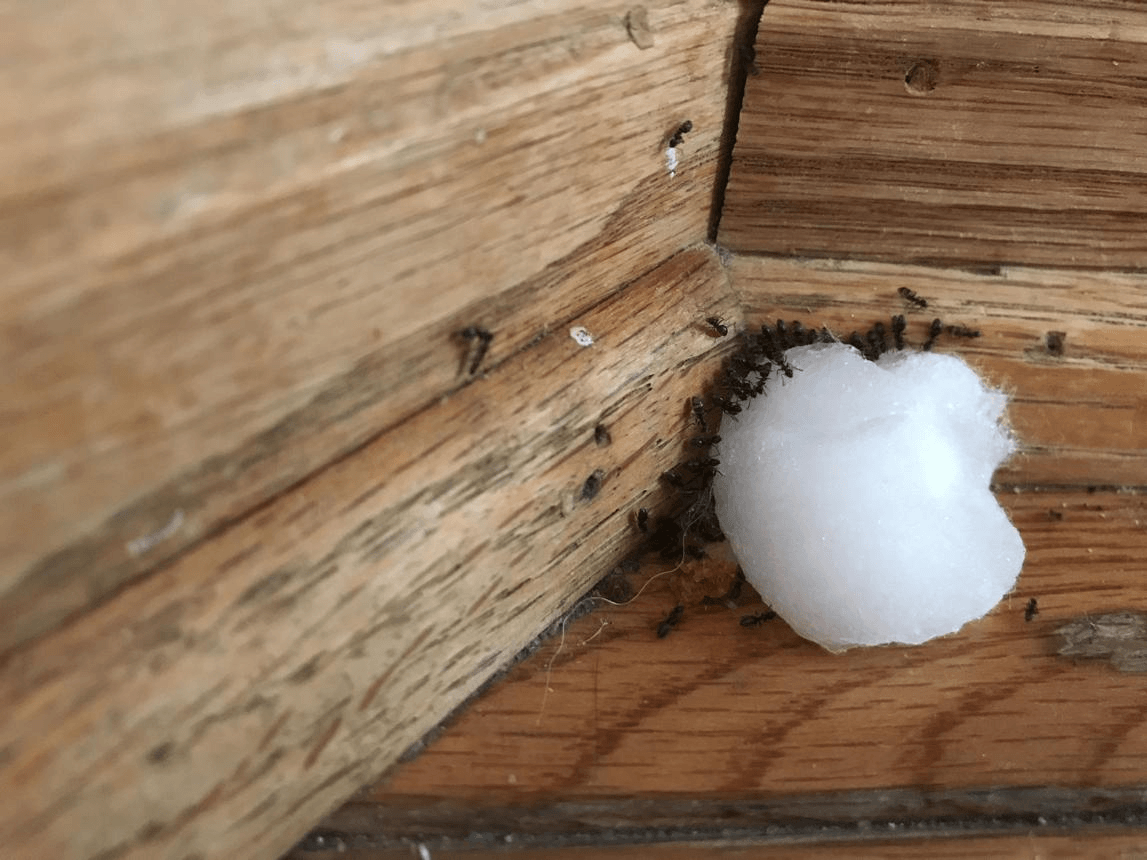
This is the most important step. Borax bait works through trophallaxis; worker ants carry the bait back to the nest and share it with the queen. No queen, no colony. It is slower than a contact spray but infinitely more effective for permanent elimination.
- 1 tablespoon borax (sodium tetraborate)
- 3 tablespoons powdered sugar
- Enough warm water to make a thick syrup
- Cotton balls or a small shallow container
- Mix borax and sugar, then add water and stir until dissolved
- Soak cotton balls in the solution
- Place near active trails, not directly on them, or ants will avoid the obvious obstruction
- Replace every 3 days; leave undisturbed for at least one week
For carpenter ants: Replace sugar with peanut butter; carpenter ants prefer protein and fat over sweet bait. A borax-peanut butter paste placed near wooden entry points is significantly more effective for this species.
4. Apply diatomaceous earth at baseboards and entry points
Food-grade diatomaceous earth works mechanically, the microscopic sharp particles damage ant exoskeletons and cause fatal dehydration. It leaves no chemical residue, is odourless, and is safe around children. Dust a thin, dry layer along baseboards, window sills, and any visible entry points.
- Reapply after mopping or rain diatomaceous earth loses effectiveness when wet
- Wear a dust mask during application to avoid inhaling fine particles
- For outdoor ant mounds, dust around the perimeter at dawn when ants are most active
5. Use essential oils as a perimeter repellent layer
Peppermint oil, tea tree oil, and lemon eucalyptus oil overwhelm the ants’ chemical receptors, making treated areas deeply unpleasant to cross. Use these as a second layer alongside your bait, never as a standalone solution.
- 10–15 drops peppermint essential oil
- ½ cup water
- ¼ cup white vinegar
Shake and spray along window frames, door thresholds, and baseboards. Reapply every 2–3 days.
Pet safety: Tea tree oil and peppermint oil in concentrated form are toxic to cats and dogs. Always dilute thoroughly and avoid placing near pet food bowls, bedding, or low-to-ground surfaces accessible to small animals.
6. Seal all entry points with caulk and steel wool
No amount of bait compensates for an unsealed home. Walk your home’s interior and exterior perimeter and seal cracks ants are exploiting. A crack as thin as a sheet of paper is wide enough for most ant species to use as a highway.
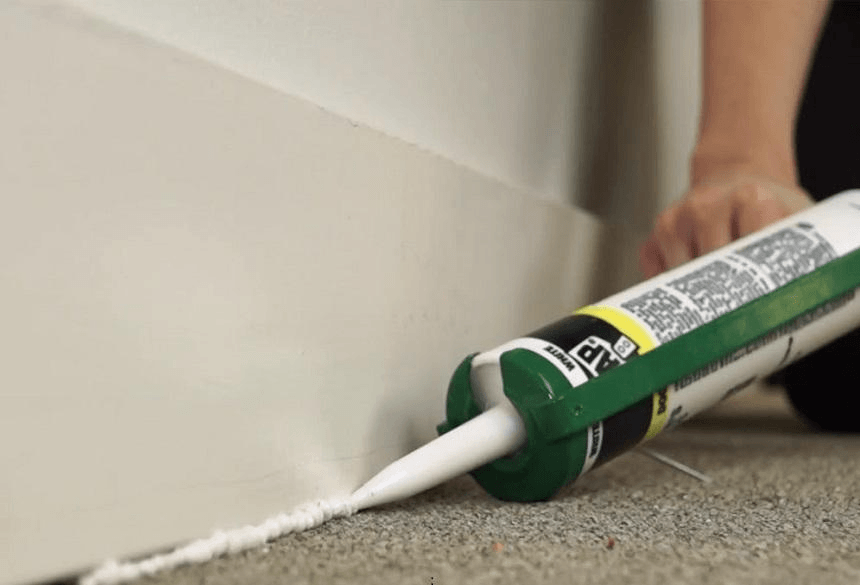
- Use silicone caulk for gaps around baseboards, window frames, and door frames
- Use expanding foam for larger gaps around plumbing pipes and utility conduits
- Stuff steel wool into any larger gaps before caulking; ants can chew through foam alone
- Inspect door sweeps and weatherstripping, these degrade over Toronto winters and commonly open new entry gaps each spring
7. Boiling water for visible outdoor nests
For outdoor colony mounds in garden beds or along a patio edge, slowly pouring 3–4 litres of near boiling water directly into the nest entrance is a highly effective chemical-free direct treatment. Do this at dawn or dusk when the majority of the colony is clustered deep inside. Larger nests may need two or three applications over consecutive days.
“My outdoor patio ants were nesting under a paving stone near the back door. Two applications of boiling water at dawn, 48 hours apart, collapsed the nest entirely. The key was going early, by 8am the foragers had already left and I would have missed most of the colony.”
Additional natural barriers and deterrents
These work as supplementary layers, not replacements for the bait-and-seal approach above, but useful additions for specific problem areas:
- Cinnamon and cayenne pepper: Sprinkled along doorways and garden perimeter edges as a barrier ants actively avoid crossing. Reapply after rain.
- Coffee grounds: Used grounds scattered around the home’s foundation and in garden beds act as a natural deterrent and mild barrier. A client in East York used this around her compost bin and saw a noticeable reduction in trail activity within a week.
- Dish soap spray: A few drops of dish soap in water kills ants on contact by disrupting surface tension and suffocating them through their exoskeleton. Use it for active clusters on countertops as a quick-response tool.
- Bay leaves in the pantry: Place one bay leaf in each dry-goods container; the scent repels ants without affecting food flavour. A low-effort, permanent deterrent once the main infestation is cleared.
Natural remedy comparison
| Remedy | Kills colony? | Pet safe? | Best used for |
|---|---|---|---|
| Borax sugar bait | Yes — via queen | Use caution | Indoor trails, colony elimination |
| Diatomaceous earth | Yes — over time | Yes | Baseboards, entry points |
| Vinegar spray | Trail only | Yes | Daily trail disruption |
| Essential oils | Repels only | Dilute carefully | Perimeter deterrent |
| Boiling water | Yes — direct | Yes | Outdoor mounds |
| Dish soap spray | Contact only | Yes | Active surface clusters |
| Cinnamon / cayenne | Repels only | Yes | Garden perimeter, doorways |
Prevention: How to Keep Ants Out Long-Term
Elimination without prevention is a temporary fix. Our team at Pest Removal Toronto consistently finds that homes with recurring infestations share the same structural and maintenance gaps.
- Daily kitchen habits: Wipe countertops after every meal. Sweep floors daily. Empty indoor bins every two days in a tight-lidded container. Clean behind the stove and fridge monthly.
- Pantry organisation: Hard airtight containers for all dry goods, cardboard boxes are not ant-proof. Add a bay leaf inside each container as a passive deterrent.
- Moisture control: Fix leaks immediately. Check under sink cabinets weekly. A slow drip unnoticed for two weeks can attract a colony, carpenter ants specifically seek damp wood.
- Spring perimeter check: Re-inspect door sweeps, weatherstripping, and caulk lines each spring, Toronto winters crack and contract these materials, reopening old entry points.
- Garden maintenance: Keep mulch, compost, and firewood at least 30 cm from the foundation. Trim branches touching the roofline, common pathways for carpenter ants into attic spaces.
“A client in Toronto called our team three summers in a row for the same kitchen ant problem. On the third visit we found seven unsealed gaps along the foundation hidden behind garden mulch pushed directly against the wall. Pulling the mulch back 30 cm and sealing those gaps ended the cycle completely.”
When Natural Methods Are Not Enough
Contact a professional from Pest Removal Toronto if you notice any of the following:
- Sawdust-like frass near wooden baseboards or door frames, carpenter ant tunnelling may have already compromised structural wood
- Trails returning within 24 hours of treatment even with active borax bait, the colony may have multiple satellite nests
- Ants emerging from electrical outlets or wall voids, large colony nested inside the wall structure
- More than two weeks of consistent natural treatment with no meaningful reduction
- Outdoor mound keeps re-establishing, deeper complex colony beyond DIY reach
Stop Ants Before They Stop You
The combination works vinegar to erase the trail, borax bait to reach the queen, diatomaceous earth to block re-entry, and sealed gaps to keep the next colony out. Start today and most infestations clear within two weeks. If yours does not, Pest Removal Toronto is one call away, same-week, guaranteed, done.
What is the fastest natural way to get rid of ants in the house?
Borax sugar bait is the fastest path to full colony elimination, it works through trophallaxis, meaning worker ants carry the bait back and share it with the queen. Combine it with daily vinegar spray on trails for faster results. Most infestations respond within five to ten days.
Why do ants keep coming back even after treatment?
The most common reason is that only the trail was treated, not the colony. If the queen survives, she will rebuild the worker population within weeks. Borax bait and boiling water are the only home remedies that target the nest and queen directly. Sealing entry points is equally critical to prevent reinfestation from a different colony.
How do I find where ants are nesting inside my home?
Follow the trail in both directions, toward the food source and away from it back to the nest. Indoor nests are commonly found inside wall voids near moisture, behind baseboards, under flooring near leaks, or inside hollow door frames. Placing borax bait as close to the nest entrance as possible delivers the fastest results.
Are natural ant remedies safe for pets and children?
Most are, with specific precautions. Diatomaceous earth (food-grade), vinegar spray, and cinnamon barriers are safe around pets and children. Borax bait should be placed in enclosed containers out of reach. Tea tree oil and peppermint oil should be diluted and kept away from areas accessible to cats and dogs.