
Getting rid of ants in your house naturally starts with removing the things that attract them and stopping the routes they use to enter. Clean up food and moisture sources, store food in sealed containers, clean active ant trails, identify where ants are entering or nesting, and use an appropriate ant bait when needed. Sealing cracks and gaps around doors, windows, plumbing, foundations, and other entry points can also help prevent ants from coming back.
At Pest Removal Toronto, our team helps homeowners identify the cause of ant problems and choose practical treatment options based on the type of ant, where it is active, and whether the colony may be hidden inside or around the property. While many minor ant problems can be managed with proper cleaning, baiting, and exclusion, persistent activity may require a closer inspection to locate the nest and address the source of the infestation.
In this guide, we explain seven practical ways to get rid of ants naturally, along with how to identify common household ants, disrupt active trails, manage entry points, prevent reinfestation, and recognize when professional pest control may be necessary. The goal is not only to remove the ants you can see, but to address the conditions that are allowing them to keep coming back.
Identifying Common Household Ant Species
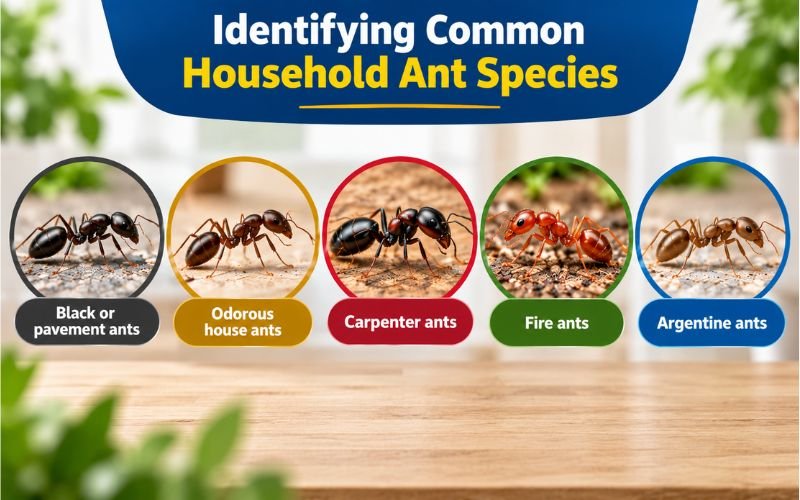
Correct identification helps you choose the right control strategy. Size, appearance, location, food preference, and nesting behavior can all provide useful clues.
| Species | Size | Appearance | Where Found | Attracted To | Main Concern |
|---|---|---|---|---|---|
|
Black or pavement ants |
2 to 3 mm |
Dark brown to black |
Foundations, concrete, basements |
Sweet foods and proteins |
Usually nuisance activity |
|
Odorous house ants |
2 to 3 mm |
Brown to dark |
Kitchens, walls, appliances, moisture areas |
Sweet foods and liquids |
Persistent indoor trails |
|
Carpenter ants |
6 to 12 mm |
Large, black or reddish black |
Damp wood, wall voids, door frames, attics |
Moisture and food sources |
Possible wood damage |
|
Fire ants |
2 to 6 mm |
Reddish brown |
Outdoor soil and mounds |
Proteins and fats |
Stinging risk |
|
Argentine ants |
2 to 3 mm |
Light to dark brown |
Walls, flooring, moisture areas |
Sweet foods and liquids |
Persistent trails |
Signs of an Ant Infestation
Early signs can help you locate the food source or nesting area before the problem becomes more established.
- Visible trails along walls, counters, baseboards, windows, or floors.
- Repeated activity around food, pantry items, sinks, appliances, or pet food.
- Sawdust like debris near wood, which can indicate carpenter ant activity.
- Ant trails returning after the same area is cleaned.
- Repeated appearance of winged ants indoors.
7 Natural Ways to Get Rid of Ants
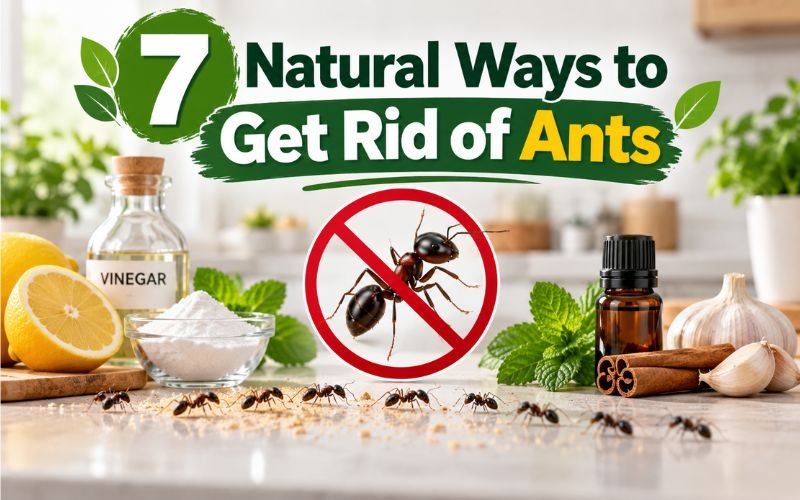
Use these methods as a coordinated control plan rather than relying on one remedy. Start by removing the conditions that support ants, then address trails, the likely nest, baiting, entry points, and prevention.
1. Remove Food and Moisture Sources
Store sugar, flour, cereal, spices, pet food, and other dry goods in sealed containers. Clean spills and crumbs quickly, wipe counters after meals, and sweep floors regularly. Check under sinks, around appliances, and near plumbing for leaks. Moisture is especially relevant when carpenter ants are involved.
2. Clean and Disrupt Active Ant Trails
Ants can follow chemical trails left by other workers. Cleaning an active route can help disrupt that path while you address the source. A diluted white vinegar solution can be used on suitable hard surfaces. Test it first and never mix vinegar with incompatible cleaning products. Trail cleaning is a supporting measure, not colony elimination.
3. Find the Nest and Use Appropriate Ant Bait
Follow active trails when possible to identify where ants are entering or where they may be nesting. Do not assume the visible workers represent the entire colony. Bait can be more useful for colony control than repeatedly killing visible ants because foraging ants may carry suitable bait back to the nest and share it with other colony members. Use a commercially labelled ant bait when possible and follow its label. Keep bait away from children, pets, food, and food preparation areas. Different species may respond to different bait types.
4. Apply Diatomaceous Earth Carefully
Food-grade diatomaceous earth can act as a physical barrier in dry areas where ants are entering or travelling. Apply only a thin layer and follow the product label. Avoid creating airborne dust and do not inhale it during application. Moisture can reduce its effectiveness.
5. Use Essential Oils as a Deterrent
Peppermint and other strongly scented oils are sometimes used to make treated areas less attractive to ants. Treat them as supporting deterrents rather than dependable colony treatments. Concentrated essential oils can be harmful to pets, so use appropriate dilution and keep them away from pet food, bedding, and direct animal contact.
6. Seal Ant Entry Points
After identifying where ants are entering, seal the route. Check gaps around windows, doors, baseboards, plumbing penetrations, utility lines, and foundation cracks. Use an appropriate sealant, inspect door sweeps and weatherstripping, and trim vegetation that creates access to the building.
7. Manage Outdoor Ant Nests Carefully
Outdoor nests can extend beyond the visible entrance, so treating only the surface may not solve the problem. Avoid methods that create unnecessary burn or exposure risks. For persistent outdoor colonies, use a properly labelled outdoor treatment or arrange a professional inspection.
Additional Natural Barriers and Deterrents
Household deterrents can be supporting measures, not replacements for removing food sources, addressing moisture, baiting when appropriate, and sealing entry points.
- Cinnamon can be used as a temporary scent barrier, but results can vary.
- Coffee grounds are sometimes used outdoors, but you shouldn’t rely on them for colony control.
- Dish soap and water can remove exposed ants from hard surfaces, but contact treatment does not address the nest.
- People sometimes use bay leaves near dry goods, but sealed storage and cleaning are more reliable prevention steps.
Natural Ant Remedy Comparison
| Method | Primary Use | Important Limitation |
|---|---|---|
|
Ant bait |
Colony control |
Results depend on species, bait, placement, and colony structure |
|
Trail cleaning |
Disrupting active routes |
Does not normally eliminate the colony |
|
Diatomaceous earth |
Dry barriers and entry areas |
Requires correct application and dry conditions |
|
Essential oils |
Deterrence |
Not a reliable standalone colony treatment |
|
Dish soap spray |
Visible ants on surfaces |
Contact only |
|
Outdoor labelled treatment |
Outdoor nests |
Must be used according to the product label |
Natural Does Not Always Mean Risk Free
A natural product is not automatically effective or risk free. Home remedies can vary in effectiveness, and some substances can create exposure risks for people or pets. For persistent infestations, prioritize identification, sanitation, exclusion, and an appropriate labelled treatment rather than combining many unverified remedies.
How to Prevent Ants From Coming Back
- Keep food in tightly sealed containers.
- Clean crumbs, spills, and food residue quickly.
- Keep indoor bins closed and clean food waste areas regularly.
- Repair plumbing leaks and persistent moisture.
- Inspect cracks around windows, doors, foundations, and utility penetrations.
- Keep mulch, compost, firewood, and similar materials from sitting directly against the foundation where practical.
- Trim branches and vegetation that provide access to the roof or exterior walls.
- Recheck previous entry points after seasonal weather changes.
When to Call Pest Removal Toronto
Natural DIY methods may not be enough when the infestation is persistent or the ants are associated with structural areas. Professional pest control can be appropriate when you see carpenter ant evidence near wood, ants emerging from wall voids or electrical areas, trails that repeatedly return despite consistent treatment, or outdoor colonies that keep reappearing.
A professional inspection can help identify the species, locate likely nesting areas, identify moisture or structural conditions, and select a treatment strategy based on the actual infestation.
Final Word
The most effective natural ant control plan is simple: remove food and moisture, clean active trails, locate the likely nest, use an appropriate labelled bait when needed, seal entry points, and monitor the area. If the infestation persists or involves wood, wall voids, or repeated outdoor nesting, professional inspection is the next practical step.
Frequently Asked Questions
Borax sugar bait is the fastest path to full colony elimination, it works through trophallaxis, meaning worker ants carry the bait back and share it with the queen. Combine it with daily vinegar spray on trails for faster results. Most infestations respond within five to ten days.
The most common reason is that only the trail was treated, not the colony. If the queen survives, she will rebuild the worker population within weeks. Borax bait and boiling water are the only home remedies that target the nest and queen directly. Sealing entry points is equally critical to prevent reinfestation from a different colony.
Follow the trail in both directions, toward the food source and away from it back to the nest. Indoor nests are commonly found inside wall voids near moisture, behind baseboards, under flooring near leaks, or inside hollow door frames. Placing borax bait as close to the nest entrance as possible delivers the fastest results.
Most are, with specific precautions. Diatomaceous earth (food-grade), vinegar spray, and cinnamon barriers are safe around pets and children. Borax bait should be placed in enclosed containers out of reach. Tea tree oil and peppermint oil should be diluted and kept away from areas accessible to cats and dogs.