
To remove a wasp nest safely, wait until dusk when wasps are sluggish, suit up in full protective gear, and blast the nest entrance with an aerosol wasp freeze spray for 10–15 seconds. Leave it untouched for 24–48 hours, then knock the dead nest into a sealed bag and dispose of it. For nests larger than a softball, positioned above 6 feet, or near high-traffic areas like doorways or playgrounds, calling a licensed professional is the safest and most reliable option.
Wasps buzzing around your home can turn a peaceful backyard barbecue into chaos. If you’ve spotted a wasp nest hanging from your eaves, tucked in the ground, or hidden in a shrub, you’re not alone. These stinging insects build nests in spring and reach peak colony size in late summer, creating real headaches for homeowners across Toronto, Scarborough.
In this comprehensive guide, we’ll cover everything from identifying common wasps like yellowjackets and bald-faced hornets to step-by-step DIY wasp nest removal. We’ll also cover when hornet nest removal or professional yellowjacket control makes more sense than a DIY attempt, plus long-term prevention strategies. Drawing from over a decade of hands-on field experience at Pest Removal Toronto, where our team has tackled hundreds of nests in urban backyards , every section blends practical methods with real-world results.
In this guide
- Identifying wasp species: yellowjackets, hornets, and paper wasps
- Safety precautions and protective gear checklist
- Signs it is time to call a professional
- Step-by-step DIY removal guide
- Natural removal methods
- Advanced field tips
- Long-term prevention strategies
- Frequently asked questions
Identifying Wasp Species
Yellowjackets, Bald-Faced Hornets, and Paper Wasps
Before tackling how to remove a wasp nest, identify the species. Misidentification is the most common reason DIY treatment fails, and in some cases, treating the wrong nest the wrong way can result in a dangerous swarm rather than a resolved problem.
Wasp species identification and removal guide
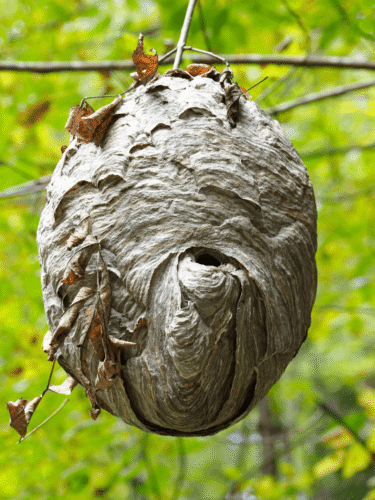
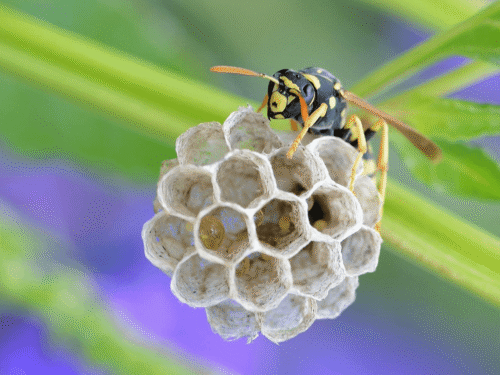
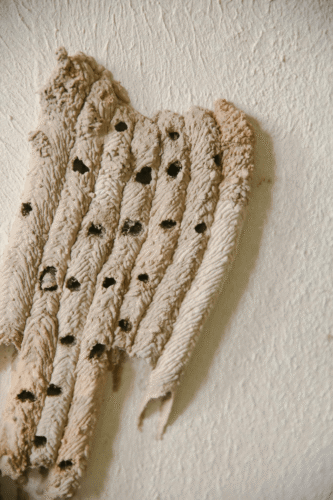
| Species | Size | Colour | Nest type & location | Colony size | Aggression | DIY safe? |
|---|---|---|---|---|---|---|
| Yellowjacket | ~½ inch | Black and yellow stripes | Underground or wall voids; football-shaped paper nest | Up to 5,000 by fall | Very high | Small nests only |
| Bald-faced hornet | ~¾ inch | Black with white face markings | Aerial; trees, eaves, shrubs; gray enclosed paper ball | 400–700 workers | Very high | Call a pro |
| Paper wasp | ~1 inch | Reddish-brown with yellow | Open umbrella comb; eaves, porches, door frames | Up to 30 workers | Moderate | Yes — manageable |
| Mud dauber | ~1 inch | Black with yellow legs; thread waist | Small mud tubes on walls or ceilings; solitary | Solitary (1) | Very low | Yes — scrape off |
| European hornet | ~1 inch+ | Brown and yellow; larger body | Tree hollows, wall voids, attics; enclosed paper nest | 200–400 workers | Moderate–high | Small nests only |
Pro tip: Snap photos at dusk from a safe distance for accurate ID before any treatment. Differentiate wasps from bees (bees are fuzzy with pollen legs) and mud daubers (thread waist, solitary, harmless) both are sometimes mistaken for aggressive wasps when they are not.
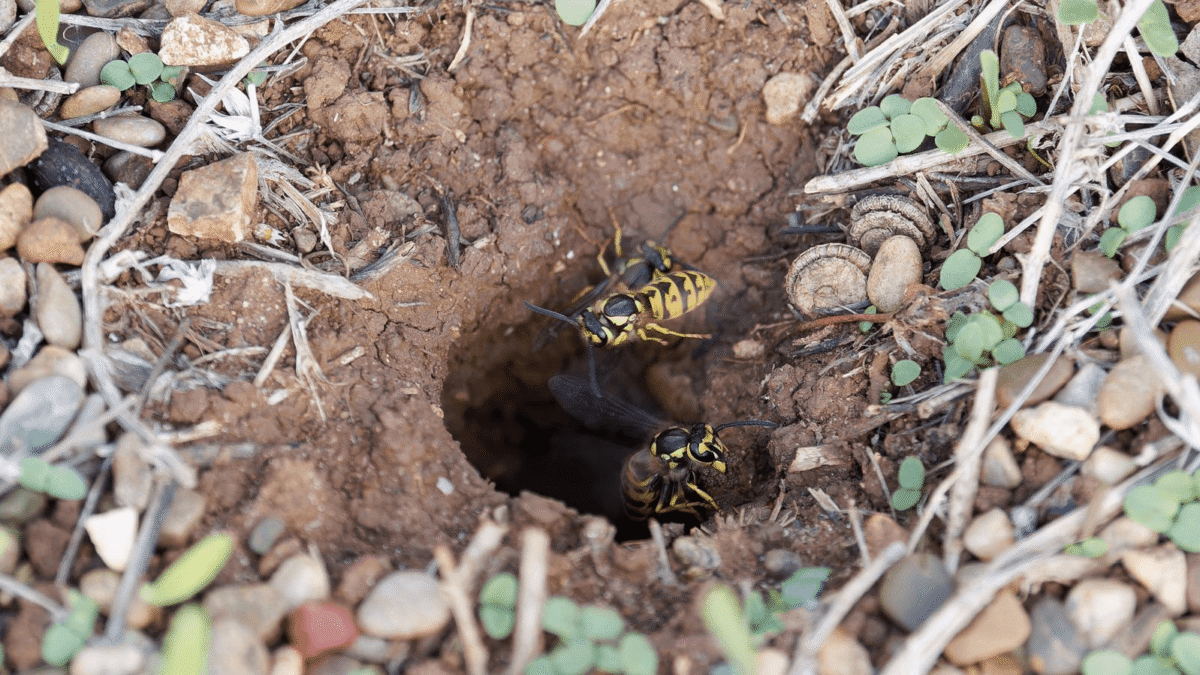
Yellowjackets: the aggressive ground-dwellers
Yellowjackets are black-and-yellow striped wasps about ½ inch long, known for their football-shaped nests underground or in wall voids. They are scavengers drawn to picnics and garbage, making them a persistent problem on patios throughout Toronto summers peak season typically runs August through October when colony size is at its largest.
“One of my earliest yellowjacket control jobs involved a client in a suburban yard in Etobicoke who stepped on a hidden ground nest while mowing the lawn. Dozens poured out in seconds, stings everywhere. These nests can house up to 5,000 wasps by fall, all growing from a single queen who starts the colony in spring from scratch. That job taught me never to treat a ground nest during daylight.”
Paper wasps: umbrella nests on eaves
Slender, reddish-brown paper wasps (around 1 inch) build open, honeycomb nests under rooflines, porches, and door frames. They are less aggressive than yellowjackets unless the nest is directly touched, but a nest above a frequently used doorway is still a real stinging risk. Queens overwinter in sheltered spots and rebuild annually in spring, which is why the same location sees a new nest each year.
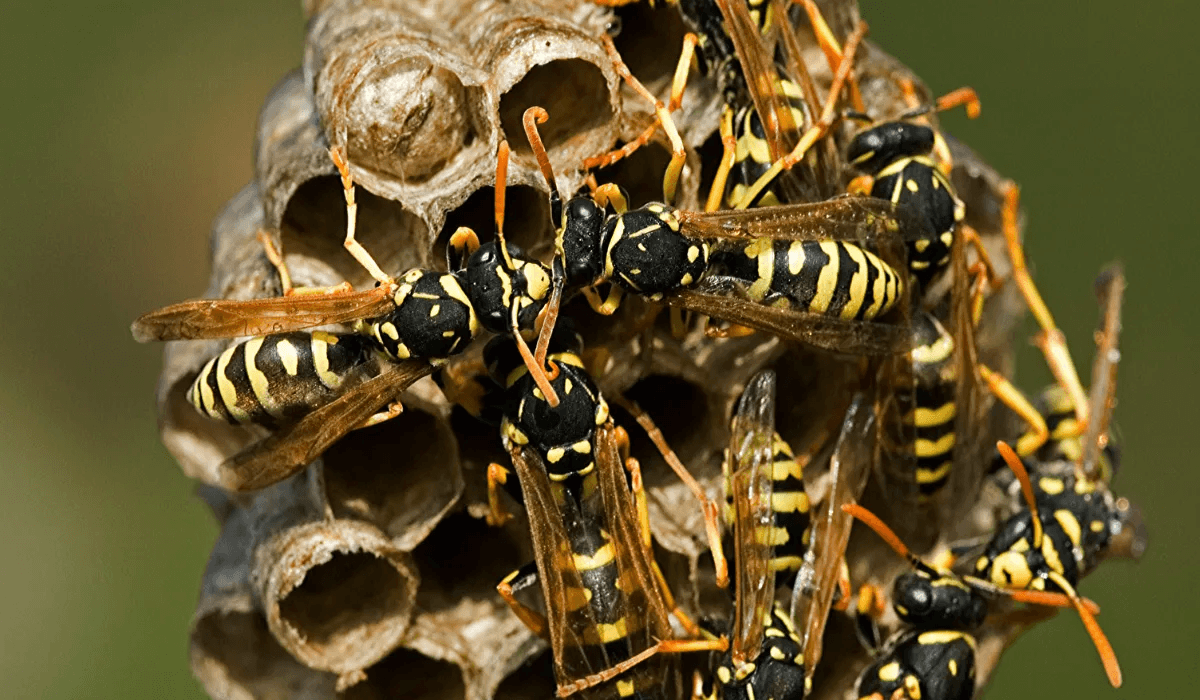
Bald-faced hornets: high-risk aerial nests
Bigger at ¾ inch with distinctive white facial markings, bald-faced hornets build gray, paper-like enclosed nests in trees or under eaves, often 3 to 5 feet off the ground, occasionally much higher. They are highly defensive and can sting repeatedly without losing their stinger, unlike honeybees.
Safety First: Protective Gear Checklist Before Removal
Wasp stings cause pain and swelling in most people and anaphylactic shock in an estimated 1–3% of the population (Health Canada). Multiple stings from a disturbed colony can send even non-allergic individuals to hospital. Full protective gear is non-negotiable for any DIY removal attempt.
- Long-sleeved shirt and thick trousers no thin fabrics
- Heavy-duty gloves, leather or thick rubber
- Closed-toe boots, taped to trouser seams, face net or beekeeper-style veil
- Goggles or safety glasses
- Tape all sleeve and trouser seams, no exposed skin
- Epinephrine auto-injector nearby if you have any allergy history
- Buddy system, never attempt alone, with a car escape route planned
note: Local municipal guidelines encourage humane, targeted methods. Gasoline, fire, and unregistered pesticides are illegal for use on wasp nests in Ontario and present serious additional hazards beyond the sting risk.
When to Call a Pest Control Professional
DIY removal works well for small, accessible nests, roughly softball-sized or smaller, at ground level, away from high, traffic areas. Call a licensed professional from Pest Removal Toronto instead if any of the following apply:
- The nest is larger than 10 inches in diameter, or located more than 6 feet off the ground
- The nest is inside a wall void, attic space, or other enclosed structure, these require injection treatment, not spray
- The nest is near a doorway, playground, or other area with regular foot traffic
- You or anyone in the household has a known allergy to stinging insects
- The colony has returned after a previous DIY attempt
- You can hear rustling inside a wall but cannot locate the nest entrance
Step-by-Step DIY Guide: How to Remove a Wasp Nest
This method works for approximately 80% of small, accessible nests paper wasp nests on eaves, small ground nests with visible entry holes, and aerial nests below head height. Total active time: roughly 30 minutes over two days, with a 24–48 hour wait period in between.
Scout and prepare (day before)
Observe the nest from a safe distance at dusk, note entry and exit holes, traffic patterns, and the time of peak activity. This information shapes your entire approach.
- Buy an aerosol wasp freeze spray with at least 20-foot range (Raid, Spectracide, or equivalent)
- Prepare a sealed trash bag and an extension pole for removal the following night
- Natural alternative: mix ¼ cup dish soap in 2 litres of water, effective for very small, exposed paper wasp nests only
Attack at dusk — timing is critical
Evening wasp treatment is significantly more effective than daytime attempts. At dusk, the full colony is inside, wasps are cooler and slower, and forager traffic has stopped for the night.
- Dress in full protective gear; approach from the side with wind at your back
- Shake the can for 30 seconds; blast the entry hole for 10–15 seconds until visibly dripping
- For ground nests: pour solution slowly into the hole, then immediately cover with a heavy flat object
- Retreat 50 feet immediately, do not knock the nest yet.
Monitor and wait 24–48 hours
This is the step most DIYers skip, and it is why they get stung. Forager wasps that were away from the nest during treatment will return and remain active around the site for up to 72 hours after spraying.
- Check from a safe distance, if no wasps are entering or leaving, the colony is dead
- If activity resumes, re-spray at the next dusk and wait another 24 hours before checking again
Remove, seal, and dispose
- Knock the nest into a sealed bag using a long pole, do this from a distance
- Seal the bag tightly and freeze for 48 hours before putting in the outdoor bin
- Seal the vacated entry point with silicone caulk, steel wool, or expanding foam, this prevents a new queen from using the same spot next spring
Natural Removal Methods
For homeowners who prefer to avoid aerosol insecticides entirely, several natural approaches are effective for small, accessible nests, though they are less reliable for large colonies or enclosed nests like bald-faced hornet hives.
Peppermint oil spray
Mix 10–15 drops of pure peppermint oil with 250ml of water in a spray bottle. Apply directly to small, exposed nests or around potential nesting sites as a deterrent. The strong scent disrupts the wasps’ chemical communication and makes the area inhospitable. Reapply every 3–4 days as the scent fades outdoors.
Soapy water solution
Two tablespoons of dish soap per litre of water, applied directly to a small exposed nest, clogs the wasps’ breathing pores (spiracles) and causes rapid suffocation. This works reliably for paper wasp nests with fewer than 20 visible cells but is too slow-acting for larger colonies where most wasps are protected inside an enclosed structure.
Decoy nest (preventive)
Hang a brown paper bag inflated to look like a nest near eaves or porch areas in early spring. New queens scouting for nest locations will detect what appears to be an existing colony and move on. This strategy is most effective as a preventive measure started in April, before queens have already committed to a site.
Advanced Tips from the Field
Over a decade handling wasp nest removal across the Greater Toronto Area, our team at Pest Removal Toronto has encountered patterns that rarely appear in standard guides.
- Urban hidden nests: Toronto homes with older construction frequently have wall voids and attic gaps that yellowjackets exploit. If you see forager traffic but cannot locate the nest entrance, use a flexible endoscope or call a professional for thermal imaging, the nest may be deep inside a wall cavity.
- Seasonal timing advantage: The easiest removal window is early May to early June, when new colonies are queen-only or have fewer than 20 workers. The same nest that is manageable in May becomes a serious hazard by August with 2,000+ active workers.
- Pheromone tracking: Even after a successful removal, wasps track pheromone trails back to the vacated site for up to two weeks. Vacuum residue from the nest cavity after removal and wipe the area with undiluted white vinegar to neutralise the chemical signal.
- Rainy conditions: Never treat on rainy nights wet surfaces make ladders and footing hazardous, and wasps can become unpredictably aggressive in low-pressure weather. Wait for a dry, calm evening.
Preventing Wasp Nests
Long-Term Yellowjacket Control Strategies
The most cost-effective wasp management is preventing nests from establishing in the first place. Our team consistently finds that repeat-infestation homes share the same structural and maintenance vulnerabilities.
- Seal entry points every spring: Caulk cracks around fascia boards, soffits, window frames, and utility pipes before April. Pay particular attention to gaps where walls meet rooflines, the most common yellowjacket access point in Toronto-area homes.
- Remove attractants: Use trash bins with tight-fitting lids, clean barbecue grates after every use, and eliminate standing water. Yellowjackets are scavengers, they are drawn to protein and sugar sources before they are drawn to nesting sites.
- Yellow jacket traps in spring: Hang commercial bait traps in late April to intercept new queens before they establish colonies. Empty and rebait weekly. Position traps away from seating areas, traps attract wasps, not repel them.
- Landscaping: Trim shrubs and overgrown hedges in early spring. Plant mint, eucalyptus, or wormwood near patio areas, their strong scents act as natural deterrents.
- Decoy nests: Hang inflated brown paper bag decoys at likely nesting points (eave corners, pergola beams) in April before queens scout locations.
Conclusion
You’ve got the knowledge, now act before the colony does. A nest that’s tennis-ball-sized today can triple in size within weeks. Identify it, gear up, hit it at dusk, and give it 48 hours. Small nest? You’ve got this. Large, hidden, or high up? That’s what Pest Removal Toronto is for same-week, guaranteed, done
FAQ
Most wasps die within a few hours, but full activity can take 24–48 hours to stop.
Avoid the area during this time to prevent stings.
Ground nests are dangerous, keep distance and avoid blocking the entrance.
It’s safest to call a professional pest control service.
Yes, wasps are less active at night, making it safer for removal.
Always use protective gear and proper treatment spray.
Wasps don’t reuse old nests, but they may build nearby again.
Removing the nest early helps reduce future activity.