
Every autumn, homeowners across Toronto and the Greater Toronto Area (GTA) sometimes find a wasp inside their homes and wonder why it is still around when outdoor wasp activity has almost disappeared. If you have noticed a wasp in your house during October, November, or even the winter months, you may be wondering whether there is still an active nest nearby.
Yes, most social wasps die in winter, but not all wasps disappear. In many common social wasp species, worker wasps, males, and the original queen die as the colony’s annual life cycle comes to an end. Newly mated queens are generally the main survivors. They find sheltered places to spend the winter in a dormant state known as diapause and may emerge in spring to establish new colonies.
This seasonal cycle also explains why an occasional wasp may appear indoors during colder months. An overwintering queen can sometimes become active after being exposed to warmth inside a home. However, a single indoor sighting does not automatically confirm that the insect is a queen, and repeated sightings may require further investigation.
Understanding what happens to wasps in winter can help Ontario homeowners make informed decisions about old nests, potential entry points, and preventing future wasp problems. In this guide, we explain where wasps go during winter, whether they reuse old nests, why they sometimes appear indoors, and when professional assessment may be helpful.
Why Do Most Wasps Disappear in Winter?
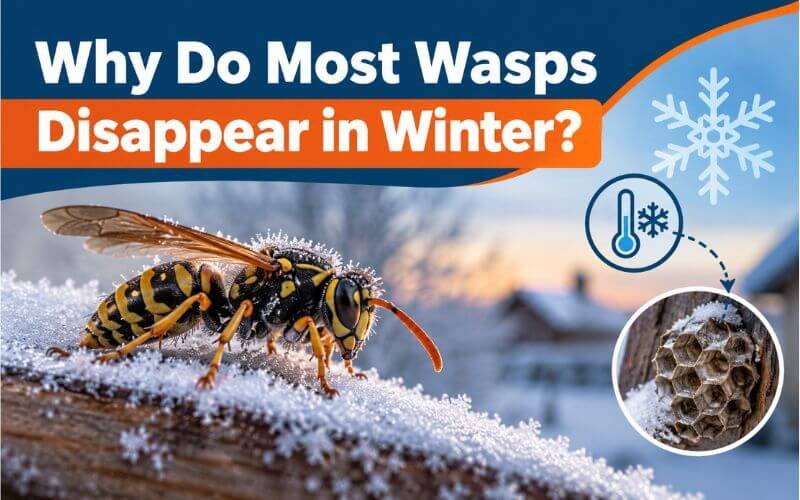
As temperatures fall, insects become less active, and food becomes harder to find. The worker population of a social wasp colony relies on ongoing foraging rather than a winter food store like the honey reserves kept by honey bees. As autumn progresses, the colony’s activity declines and the annual colony cycle ends.
Cold weather is a key part of this seasonal change, but no single temperature or date determines when every wasp colony dies. Timing varies with species, local weather, and the shelter available around a nest. In the GTA, activity often decreases through autumn, although warm spells can bring occasional wasp sightings.
What Does the Queen Do During Winter?
New queens are produced late in the season and mate before seeking sheltered places to spend the winter. Depending on the species, these locations may include protected spaces beneath bark, leaf litter, soil cavities, or gaps in and around buildings. During diapause, the queen’s activity and energy use are reduced.
Diapause is often casually called hibernation, but it is a specific dormant state in an insect’s life cycle. When conditions become suitable in spring, a surviving queen may become active and start a new colony. She generally builds a new nest rather than moving back into the old nest from the previous year.
Why Might You Find a Wasp Inside Your House in Winter?
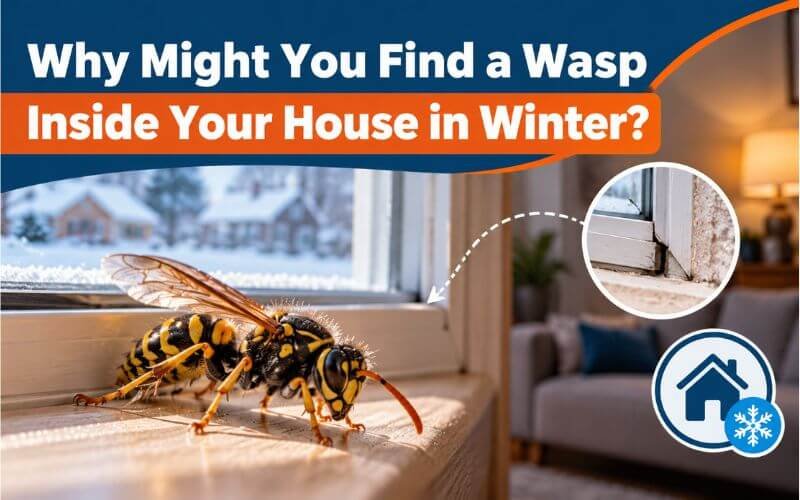
A wasp found indoors during winter may be an overwintering queen that has become active after being exposed to warmth. An insect may have entered through a gap around a roofline, soffit, vent, window, or another opening before settling in a sheltered space. Indoor heating or a warmer spell can sometimes prompt activity.
However, one indoor wasp cannot be identified as a queen based on timing alone. If you repeatedly see wasps indoors, notice several insects in one area, or hear activity inside a wall or attic, there may be an entry point or a nest-related issue that needs assessment. Avoid opening wall cavities or sealing a suspected entry point before understanding where the insects are coming from.
If you find a wasp, keep a safe distance and avoid handling or disturbing it with bare hands. People with a history of severe sting reactions should take particular care. For repeated sightings or activity in an inaccessible area, consider a qualified pest-control professional.
Do Wasps Reuse the Same Nest Every Year?
Most common social wasps build a new nest each season. Once the colony’s annual cycle ends, the old paper nest is generally abandoned and is not used as the next year’s active colony nest. A new queen may, however, choose a nearby sheltered location if the conditions remain attractive.
Old nests are made from paper-like material created from chewed wood fibres. Over time, weather can weaken the structure. A nest that appears inactive from the outside should still be assessed carefully before anyone attempts removal, especially if it is high up, near a building opening, or associated with insects entering a wall or roof space.
A new queen may investigate an area where wasps nested previously because the location offers shelter or suitable building materials. That does not necessarily mean she will reuse the old nest itself.
Do Hornets Die in Winter in Ontario?
Common social hornets in Ontario generally follow a seasonal colony cycle similar to other social wasps: the colony declines in autumn, and newly mated queens are the principal survivors that overwinter. The details can vary by species, so identification matters when a nest or insect is causing concern.
Large paper nests in trees or under eaves may be abandoned after the season, but do not assume a nest is inactive simply because the weather is cold. If there is visible activity, if the nest is difficult to reach, or if it is close to a doorway or frequently used area, professional assessment is the safer option.
Ontario Seasonal Guide: What to Expect
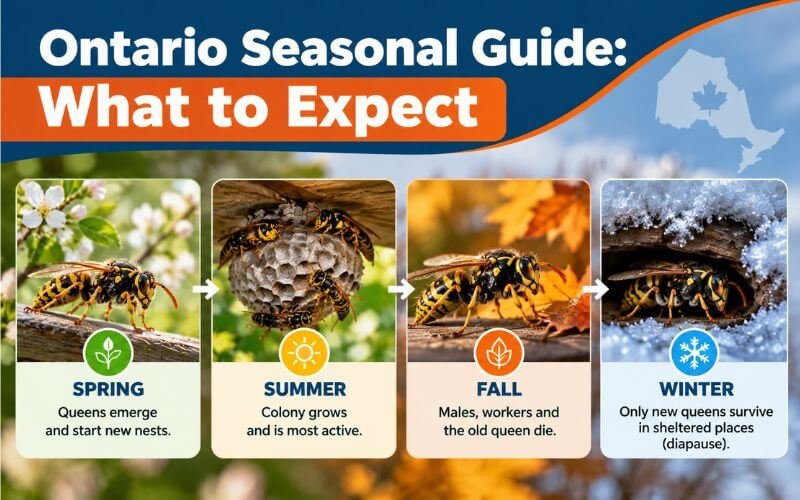
| Season | What to expect |
|---|---|
|
Late summer |
New queens and males may be produced. |
|
Autumn |
Colony activity declines; queens seek shelter. |
|
Winter |
Most social colonies are inactive; queens may overwinter. |
|
Spring |
Surviving queens may start new colonies. |
|
Summer |
Colonies grow and worker activity increases. |
How to Reduce the Chance of Wasps Entering Your Home
- Inspect visible exterior gaps around soffits, fascia, vents, roof edges, and window frames.
- Repair damaged screens and maintain suitable covers on vents where required.
- Keep outdoor rubbish and food waste contained, and clean up sugary spills around outdoor eating areas.
- Monitor locations where wasps were active in the previous season, without disturbing a nest.
- Do not blindly seal a hole if wasps may already be inside a wall or roof cavity; seek advice on the source of the activity first.
When Should You Contact a Wasp Removal Professional?
Consider professional help if wasps repeatedly appear indoors, a nest is inside a wall or attic, the nest is high or difficult to access, or people in the household are at elevated risk from stings. A professional can assess the location, identify likely entry points, and advise on an appropriate response.
If you need help assessing a suspected nest, learn more about our wasp nest removal service. The phrase is highlighted so you can add the internal link to your dedicated service page in your CMS.
Wasp Nest Prevention and Removal in the GTA
Pest issues can vary from property to property, so the right next step depends on where the insects are appearing and whether there is an active nest. Homeowners in Toronto, Brampton, Mississauga, Etobicoke, Scarborough, North York, and nearby GTA communities can contact a local pest-control provider to discuss the situation and available options.
For information about our services, visit Pest Removal Toronto. This phrase is highlighted for you to add an internal link to your homepage.
Final Thoughts
Winter usually marks the end of the active season for many common social wasp colonies, but it does not mean every wasp disappears or that every indoor sighting has the same explanation. Understanding the seasonal cycle can help homeowners decide when to monitor, when to improve exclusion, and when to ask for professional advice. If you suspect a nest in a wall, attic, or hard-to-reach location, avoid disturbing it and get the source assessed.
Frequently Asked Questions
Most common social wasp colonies die off as winter approaches. Newly mated queens are typically the main colony members that survive by sheltering through winter.
Overwintering queens use protected places, which may include spaces beneath bark, leaf litter, soil cavities, or sheltered gaps in buildings. The exact location depends on the species.
A sheltered wasp, possibly an overwintering queen, may become active after exposure to indoor warmth. Repeated sightings or activity from a wall or attic should be assessed.
Most common social wasps establish a new nest each season, although a new queen may select the same general area if it offers suitable shelter.
An abandoned nest is often inactive, but activity and access should be assessed before removal. High nests, nests near openings, and nests associated with indoor activity may require professional help.