
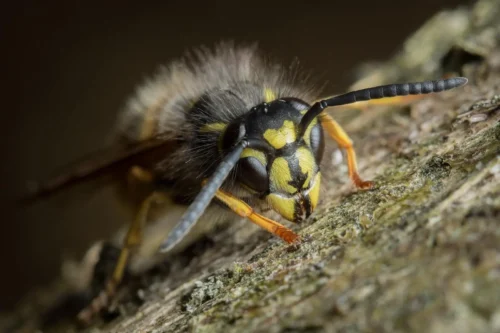
Before we get into specific scents, it helps to understand why smell affects wasps so powerfully because once you understand the mechanism, the whole approach makes a lot more sense.
Wasps rely almost entirely on their sense of smell to navigate their world. Their olfactory receptors, chemical sensors located on their antennae are extraordinarily sensitive. They use scent to locate food sources, communicate through pheromone trails, identify nestmates, navigate back to the colony, and detect threats.
When you introduce a powerful, competing scent into that environment, you’re essentially throwing noise into their chemical communication system. Strong volatile compounds the active chemicals in essential oils and aromatic plants, physically overwhelm the olfactory receptors. The wasp can no longer clearly detect the food-locating signals or the pheromone trails that guide it. It avoids the area.
This is particularly effective with certain compound categories: menthol and menthone (found in mint oils), eucalyptol (eucalyptus), linalool (lavender and rosemary), and citronellal (lemongrass and citronella). A 2014 study on volatile compounds specifically confirmed that peppermint oil caused significant wasp avoidance behaviour one of the few natural repellents with peer-reviewed backing.
The limitation: once the scent disperses, the effect diminishes. Wind, rain, and simply time will reduce concentration. That’s why consistency and placement matter as much as the scent itself.
1. Peppermint Oil — The Most Effective Natural Wasp Repellent
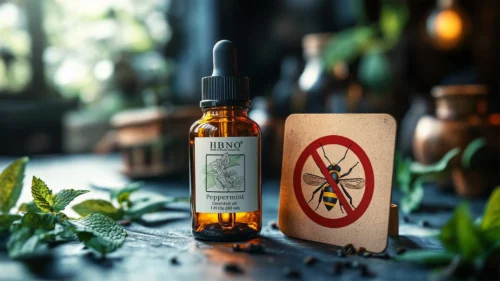
If you’re only going to use one scent, make it peppermint oil. It’s consistently the most effective natural wasp repellent across every credible source, and the one with the most research backing it.
The active compounds menthol and menthone are intensely volatile, meaning they disperse into the air quickly and in high concentrations. To wasps, this creates an almost impenetrable scent barrier that overrides their ability to detect food or follow pheromone trails.
How to use it: Mix 15–20 drops of peppermint essential oil with 250 ml of water and a small squeeze of dish soap (the soap helps it emulsify and stick to surfaces) in a spray bottle. Spray along the edges of your deck or patio, around window and door frames, along fence lines near seating areas, and anywhere you’ve noticed wasp activity. Reapply every few days and after rain.
Alternative: Soak cotton balls in peppermint oil and place them in small dishes around your outdoor dining area. The concentration from a soaked cotton ball is higher than a spray and lasts longer in a static location.
In the kitchen: A few drops of peppermint oil on cotton balls placed inside kitchen cabinet corners and along windowsills can deter foraging wasps from entering through open windows, which becomes relevant during Ontario’s August peak season when windows are open and wasp activity is at its highest.
2. Spearmint Oil — A Milder Mint Alternative
Spearmint oil contains similar active compounds to peppermint oil but at a lower concentration, making it a slightly gentler option for people who find the intensity of peppermint overwhelming indoors. It works on the same principle, menthol-family compounds disrupting wasp olfactory receptors, and is applied the same way.
Use it in the same spray formula, or combine it with peppermint oil for a broader mint-compound coverage.
3. Eucalyptus Oil — Sharp, Medicinal, and Effective

Eucalyptus oil has a sharp, medicinal scent that wasps actively avoid. The active compound eucalyptol (1,8-cineole) is intensely volatile and creates a strong scent barrier in enclosed and semi-enclosed spaces.
How to use it: Dilute 15 drops in 250 ml water and spray along the perimeter of outdoor seating areas. You can also place small branches or leaves from a eucalyptus plant in containers around your deck the crushed or disturbed leaves release concentrated oil.
Local Tip: Some Ontario nurseries carry eucalyptus in container form, which can be moved to wherever you need it most during wasp season.
Eucalyptus oil is also effective sprayed along the interior of garage door frames, which are common wasp entry points in GTA homes during late summer.
4. Lemongrass Oil — Dual-Purpose Outdoor Repellent
Lemongrass oil contains citronellal, the same compound that makes citronella effective as a mosquito repellent, plus additional volatile compounds that are highly effective against wasps. It’s a practical choice for Ontario outdoor living because it works against multiple pests simultaneously, and the scent is pleasant rather than medicinal.
How to use it: Same spray formula — 15–20 drops in 250 ml water with dish soap. Apply along the perimeter of outdoor seating areas. Lemongrass also works well in oil diffusers placed on outdoor tables, if you’re using a battery-powered diffuser during an outdoor gathering. The diffuser method keeps scent concentration more consistent than a single application spray.
Potted lemongrass plants placed around a deck or patio perimeter provide ongoing natural deterrence through the entire season and the crushed leaves release concentrated oil when brushed against.
5. Rosemary Oil — Underrated and Expert-Recommended
Rosemary oil doesn’t get as much attention as peppermint in natural pest control guides, but professional pest control sources consistently rate it as one of the more effective wasp repellents in the essential oil category. Its active volatile compounds interfere with wasp olfactory function in the same way as mint compounds.
How to use it: Spray formula as above, or place dried rosemary sprigs in mesh bags and hang them near outdoor seating areas, particularly around the dining table and BBQ area, where wasp attraction is highest during cooking.
Rosemary is also one of the easiest herbs to grow in Ontario containers, and a potted rosemary plant near a patio doorway provides both culinary use and ongoing deterrence.
6. Lavender — Effective and Garden-Friendly
Lavender is one of the most reliably effective wasp-deterrent plants you can put in a GTA garden. The active compound is linalool, a volatile terpene that wasps actively avoid while most people find pleasant. It’s the rare natural deterrent that improves the look of your outdoor space while keeping wasps at a distance.
How to use it: Fresh or dried lavender in mesh bags placed near outdoor seating creates a passive deterrent. Lavender oil in the standard spray formula works for targeted application along fence lines and deck edges.
Pro-tip: Potted lavender plants along the perimeter of a patio are particularly effective, they provide continuous volatile release through the season, tolerate Ontario’s climate reasonably well in sheltered spots, and the scent concentrates in still air on warm summer evenings.
7. The Lemon and Clove Combination
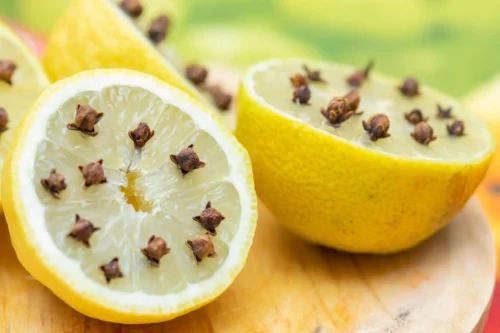
This is a traditional wasp deterrent that predates essential oils and still holds up. Cut a lemon in half and stud the cut surface with whole cloves, approximately fifteen to twenty cloves per half lemon. Place these on small saucers around your outdoor dining area.
The combination works because citrus scent (from the lemon) and eugenol (the active compound in cloves) are both volatile compounds that wasps strongly avoid. Together, they create a localised scent barrier at table level, exactly where foraging wasps are most problematic during outdoor meals.
Replace every two to three days as the lemon dries out. This method is simple, inexpensive, and requires nothing from a hardware store, which makes it useful for cottage weekends and outdoor events across Ontario.
8. Burning Coffee Grounds — The Smoke Meth
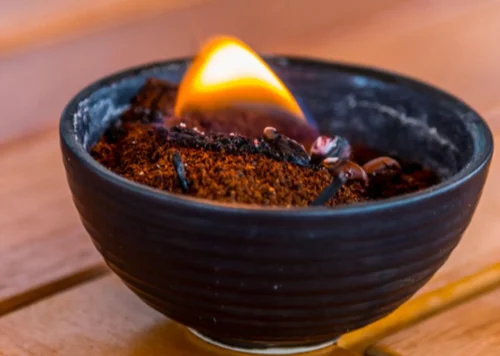
This one surprises people, but it’s genuinely effective and worth knowing about for outdoor BBQ settings. Wasps, like many insects, are deterred by smoke and burning coffee grounds produce a thick, aromatic smoke that combines the repellent effect of smoke with the additional volatile compounds in roasted coffee.
How to use it: Place dry coffee grounds in an aluminium foil tray or small fireproof dish. Ignite them with a lighter, they’ll smoulder slowly like incense. Place near the perimeter of your outdoor space. The smoke disperses upwind and creates a broader deterrent zone than a spray applied to a surface.
When I’m out conducting field assessments on breezy Muskoka cottages or backyard patios in Scarborough, traditional sprays can blow away quickly. That’s when the smouldering coffee grounds trick shines, the heavy smoke hangs in still air and acts as an effective local shield.
9. White Vinegar and Apple Cider Vinegar
Vinegar occupies an interesting dual role in wasp management: in sufficient concentration, the sharp acidic smell deters wasps from an area. In more dilute form combined with sweet bait, it forms the basis of DIY wasp traps.
For repellent purposes, use undiluted or lightly diluted white vinegar in a spray bottle and apply along surfaces, entry points, and perimeter areas. The acetic acid smell is strong enough to disrupt wasp olfactory function and mask the food-attraction scents that draw foraging wasps in.
One practical application specific to Ontario homes: spraying white vinegar along the exterior of window frames and door sills before outdoor events can reduce wasp entry into the home when windows and doors are open during summer.
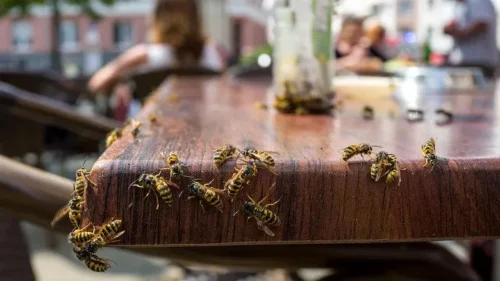
Understanding what wasps are looking for makes the whole scent-deterrent approach more strategic. In August and September in Ontario, yellow jackets and paper wasps are searching aggressively for two things: sugar and protein.
Sugar sources: Open soft drinks, juice, fruit, jam, syrup, and anything sweet left outdoors. A can of ginger ale sitting on a patio table is one of the most effective wasp attractants in the GTA in August, I’ve seen clients get stung after taking a sip from a can they hadn’t checked.
Protein sources: BBQ meat, fish, uncovered pet food, and open bins with food waste. Yellow jackets in late summer are particularly protein-focused, which is why they descend on BBQs so reliably.
Scent triggers: Floral and sweet perfumes attract wasps just as reliably as food. This is worth knowing before you apply perfume or heavily scented sunscreen before sitting on the patio.
Fermenting smells: Overripe fruit, open compost bins, improperly sealed recycling, are extremely attractive to wasps because they signal an easy sugar source.
Pairing your scent deterrents with basic attraction management, covered drinks, sealed bin lids, cleared food promptly, dramatically improves results. The scents work best when there’s nothing competing to draw wasps in anyway.