24/7 AVAILABLE 647-847-9898

24/7 Emergency Service Available
CALL 647-847-9898

Is the Great Black Wasp Dangerous? What Every Ontario Homeowner Should Know

No, the great black wasp (Sphex pensylvanicus) is not considered dangerous to humans. It is a solitary species with no colony to defend, which means it has no swarming instinct and rarely stings people. Only female great black wasps can sting, and they do so only when physically grabbed, stepped on, or when their underground nest is directly disturbed. The sting is painful but not medically serious for most people. The one exception: anyone with a known venom allergy should treat a great black wasp sting with the same caution as any other wasp sting.

Every August, without fail, I get a version of the same call. A homeowner in Etobicoke or Scarborough has spotted something in their garden that’s stopped them in their tracks, a wasp so large, so deeply black, and so purposeful in its movements that they’ve immediately backed away and reached for their phone.

“There’s an enormous black wasp in my yard,” they tell me. “I’ve never seen anything like it. Should I be worried?”

I always ask them the same question: “Does it have shiny wings with a blue shimmer? About the length of your thumbnail, maybe longer? Moving between flowers or carrying something along the ground?”

When the answer is yes and it almost always is,  tell them the same thing: “That’s a great black wasp. It’s one of the most impressive-looking insects you’ll find in an Ontario garden. And it almost certainly has no interest in you whatsoever.”

The reaction is usually relief, followed immediately by disbelief. Something that large, that black, with that much presence, not dangerous?

Not dangerous. And in this guide, I’ll explain exactly why, what this wasp actually is, what it’s doing in your garden, when it would sting, and what you should do if you find one. Because the great black wasp is one of the most misunderstood insects in the GTA, and the fear is almost entirely disproportionate to the actual risk.

What Exactly Is the Great Black Wasp?

Is the Great Black Wasp Dangerous

The great black wasp (Sphex pensylvanicus) is a species of digger wasp belonging to the family Sphecidae  sometimes called thread-waisted wasps because of the distinctive narrow constriction between their thorax and abdomen. It’s also known by two other common names that hint at its hunting behaviour: the Katydid Hunter and the Steel-blue Cricket Hunter.

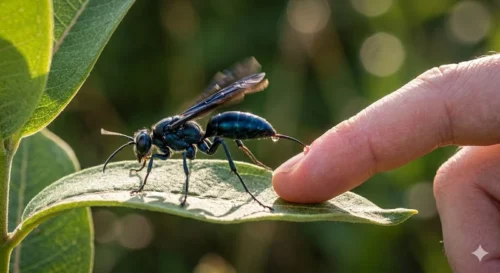
It is, by any measure, a striking insect. Adult females reach 22 to 28 millimetres in length, roughly the size of a large grape seed, making them one of the largest wasp species found in Ontario gardens. Males are slightly smaller.

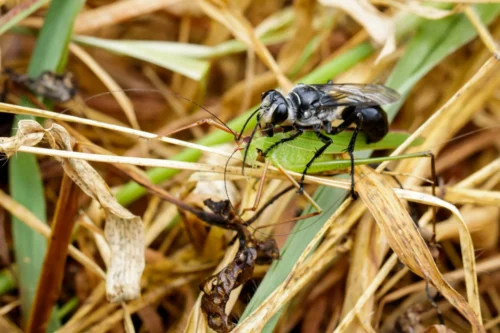
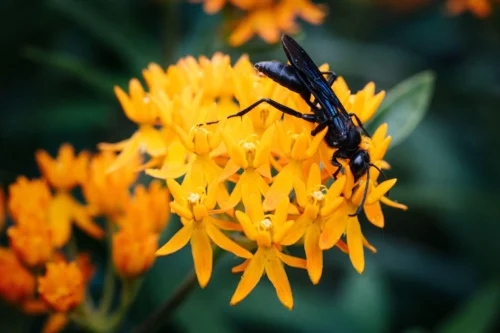
The body is a deep, matte satiny black with no markings, stripes, or patterns of any kind, which is part of what makes it so visually arresting. The wings are smoky black with a blue iridescent sheen that catches light in a way that’s genuinely beautiful up close. Long, spiny legs. Large compound eyes. Sickle-shaped mandibles with an extra prong in the middle curve, built for gripping struggling prey.

The great black wasp is found across the eastern two-thirds of Canada and the United States, and in Ontario it’s a regular summer visitor to gardens across the GTA  active from July through September in open areas with flowers and suitable soil for nesting. I’ve observed them in gardens in North York, Brampton, Mississauga, Etobicoke, and Scarborough over the years. They’re far more common than most homeowners realise, because most people who see them either panic and go inside, or mistake them for something else entirely.
Why the Great Black Wasp Is Not Dangerous


The answer to “is it dangerous?” comes down almost entirely to one biological fact: the great black wasp is a solitary insect.

This distinction is the most important thing to understand about stinging insect risk, and it’s something most people have never been told explicitly. Here’s why it matters.

Social wasps  yellow jackets, paper wasps, bald-faced hornets, European hornets live in colonies. A colony has thousands of workers, a queen to protect, larvae to feed, and a shared investment in the nest’s survival. When a social wasp colony feels threatened, it mobilises. Workers emerge in numbers and pursue the perceived threat aggressively, sometimes for significant distances. The sting risk from a social wasp isn’t just one sting  it’s the possibility of dozens.

Solitary wasps have none of this. A great black wasp female has no colony, no queen, no shared nest with thousands of nestmates. She digs her own underground burrow, provisions it with paralysed prey, lays her eggs, and moves on. There is nothing to mobilise. There is no one to call for backup. When she feels threatened, her options are fly away or sting in self-defence and flying away is almost always what she chooses.

This is why the great black wasp is so consistently described as docile and non-aggressive across every credible source. The aggression that makes yellow jackets so frightening in August and September is a product of colony defence. Take away the colony, and you take away almost all of the defensive behaviour.

Males cannot sting at all. Male great black wasps have no stinger, their only purpose is reproduction, after which they die. If you encounter a great black wasp hovering near flowers or resting on a surface, there’s a meaningful chance it’s a male, and it is physically incapable of stinging you regardless of what you do.

When Does the Great Black Wasp Sting?

In practice, a great black wasp will sting a human in two specific scenarios and both require direct contact.

Scenario 1 : Accidental contact. You step on a great black wasp while barefoot. You sit on one that’s resting on outdoor furniture. You reach into a shrub or flower border and make contact with one that doesn’t see you coming. In this situation, the wasp reacts instinctively to what feels like a threat and stings in self-defence. This is not aggression, it’s a startled reflex.

Scenario 2 : Direct provocation. You attempt to catch the wasp, swat at it repeatedly, grab it, or physically disturb the entrance to its underground burrow while she’s nearby. These actions put the wasp in a position where it perceives a direct threat to itself or its nest and responds accordingly.

In both cases, the sting is a defensive last resort, not a predatory or aggressive act. A great black wasp that simply encounters you while hunting or foraging will, in virtually every case, fly away or continue what it was doing. It is not interested in you. It is hunting grasshoppers and visiting flowers. You are not relevant to those goals.

I’ve never had a client in the GTA who was stung by a great black wasp without some form of direct contact. In contrast, I’ve had clients stung by yellow jackets who simply walked within two metres of a ground nest they didn’t know existed.

What Does a Great Black Wasp Sting Feel Like?

What Does a Great Black Wasp Sting Feel Like

For the small number of people who do get stung, the experience is consistent across accounts: a sharp, sudden pain at the point of contact, followed by localised redness and swelling that typically resolves within a few hours to a day.

The great black wasp’s venom is not designed to injure humans, it’s designed to paralyse grasshoppers and katydids. In an insect the fraction of the size of a human, that venom is powerful enough to cause complete immobilisation. In a human, the same dose causes pain and swelling at a small puncture site and essentially nothing else.

There’s no specific medical treatment needed for a great black wasp sting in a non-allergic person. The same approach you’d use for any other insect sting applies: remove the stinger if present (though great black wasps, like most wasps, don’t leave their stinger behind), wash the site with soap and water, apply a cold compress for swelling, and take an antihistamine or painkiller if needed.


The Allergy Exception — This Is the Only Real Risk

Here’s where I have to be clear about the one genuine risk the great black wasp presents.

For most people, a great black wasp sting is painful but not medically serious. For someone with a known venom allergy or an undiscovered sensitivity to wasp venom, any wasp sting  including one from a great black wasp, carries the risk of anaphylactic shock.

Signs of a serious allergic reaction to a wasp sting include: swelling of the lips, tongue, or throat; difficulty breathing or swallowing; rapid or irregular heartbeat; hives spreading beyond the sting site; dizziness, confusion, or loss of consciousness. These symptoms can develop within minutes of the sting.

If any of these signs appear, use an epinephrine auto-injector (EpiPen) immediately if available and call emergency services. Do not wait to see if symptoms improve.

If you’re spending time outdoors in Ontario between July and September, great black wasp active season, and you have a known venom allergy, carry your EpiPen. This applies to any stinging insect encounter, not just the great black wasp.

The Allergy Exception — This Is the Only Real Risk

Here’s where I have to be clear about the one genuine risk the great black wasp presents.

For most people, a great black wasp sting is painful but not medically serious. For someone with a known venom allergy or an undiscovered sensitivity to wasp venom, any wasp sting  including one from a great black wasp, carries the risk of anaphylactic shock.

Signs of a serious allergic reaction to a wasp sting include: swelling of the lips, tongue, or throat; difficulty breathing or swallowing; rapid or irregular heartbeat; hives spreading beyond the sting site; dizziness, confusion, or loss of consciousness. These symptoms can develop within minutes of the sting.

If any of these signs appear, use an epinephrine auto-injector (EpiPen) immediately if available and call emergency services. Do not wait to see if symptoms improve.

If you’re spending time outdoors in Ontario between July and September, great black wasp active season  and you have a known venom allergy, carry your EpiPen. This applies to any stinging insect encounter, not just the great black wasp.

Is the Great Black Wasp Dangerous to Pets and Dogs?

This is a question I get specifically from pet owners in the GTA, and the honest answer is: the same logic applies as for humans.

A great black wasp encountered in a garden by a dog or cat is very unlikely to sting unless the pet physically grabs or mouths the was which, unfortunately, many curious dogs and some cats will attempt. A dog that snaps at a great black wasp may get stung on the nose, lips, or inside the mouth. This is painful and may cause localised swelling, but is not medically dangerous for most pets.

The risk is higher for pets with venom sensitivities, dogs that have had previous allergic reactions to insect stings. If your pet has had a severe reaction to a wasp or bee sting before, talk to your vet about keeping an appropriate antihistamine on hand during outdoor activity in peak stinging insect season.

If your dog is stung by any wasp and develops facial swelling, difficulty breathing, extreme lethargy, or vomiting within an hour of the sting, contact your veterinarian promptly.

Identification — How to Confirm It’s Actually a Great Black Wasp

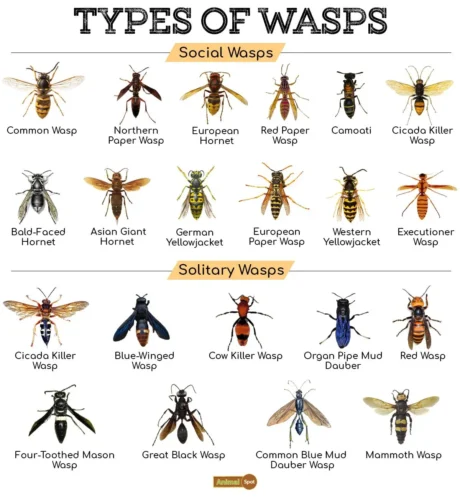
The reason so many homeowners fear this insect is also the reason they often misidentify it. Let me give you the specific identifiers.
Identification: How to Confirm It's Actually a Great Black Wasp

FeatureGreat Black WaspBlue-winged WaspCicada Killer
Body colourAll black — no markingsBlack with yellow bandsBlack with yellow markings
Wing colourSmoky black with blue iridescenceBlue-purple, smokyRusty orange
Body size22–28 mm25 mm30–40 mm (larger)
WaistVery narrow thread waistNarrowNarrow
PreyGrasshoppers, katydids, cricketsBeetle grubsCicadas
AggressionVery lowVery lowVery low
Ontario presenceCommon July–SeptemberCommon July–SeptemberPresent in southern Ontario

The great black wasp is the only large, completely all-black wasp with blue iridescent wings that you’ll commonly encounter in GTA gardens. No yellow, no orange, no banding , just deep matte black with that distinctive wing shimmer.

If you’re seeing a large black insect with yellow markings, you’re looking at a cicada killer or possibly a bald-faced hornet. If you’re seeing yellow and black banding on a smaller insect, that’s a yellow jacket. The completely black body with blue-shimmering wings is the giveaway for the great black wasp.

What Is the Great Black Wasp Actually Doing in Your Garden?

What Is the Great Black Wasp Actually Doing

Understanding what this wasp is up to makes it significantly less alarming. And what it’s doing is genuinely fascinating.

Hunting Prey for Her Larvae

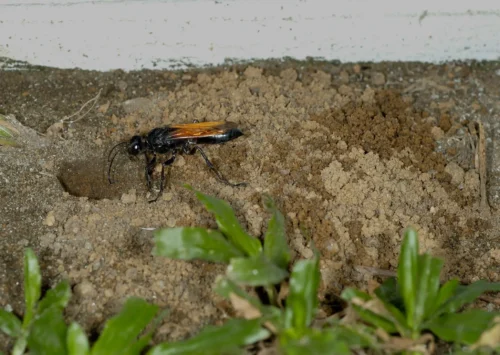
A female great black wasp spends much of her active season hunting. Her primary targets are grasshoppers, katydids, crickets, and other large Orthoptera insects the kind of herbivorous insects that damage garden plants and crops. She locates prey, delivers a precise paralysing sting that immobilises the insect without killing it, then carries or drags the paralysed prey back to her underground nest.

Inside the burrow which she’s dug herself, a foot or more into the soil using her mandibles and spiny legs, she places the paralysed prey into a chamber and lays a single egg on it. The larva hatches and feeds on the still-living, still-paralysed prey over approximately a week, then pupates. The pupae overwinter underground and emerge as adults the following summer.

The hunting behaviour is what you’re most likely to observe: a large, purposeful black wasp flying low over the garden, investigating ground-level vegetation, occasionally carrying something heavy. She may look aggressive in her movement. She is not. She is focused entirely on finding and provisioning prey.

The garden benefit is significant. A single female great black wasp hunting through an Ontario garden all summer removes a meaningful number of grasshoppers and katydids  herbivorous insects that damage vegetables, ornamental plants, and turf. This is genuine, free, natural pest control.
Should You Remove a Great Black Wasp Nest?

Should You Remove a Great Black Wasp Nest?

Almost never. But let me give you the full, honest answer.

A great black wasp nest is an underground burrow a series of tunnels and chambers dug into the soil, usually in a quiet corner of the garden, along a garden bed edge, or in a patch of bare or sparsely vegetated ground. The nest entrance is a small hole in the soil, perhaps a centimetre across. There’s no visible nest structure above ground and no workers guarding the entrance in numbers.

Because the nest contains only one female and her developing offspring  not a colony of thousands there is essentially no meaningful defensive risk from the nest itself. The female will defend the burrow entrance if you disturb it directly, but she is not monitoring the surrounding garden for threats.

Leave the nest alone in every situation where it’s not in a location that creates unavoidable conflict. A great black wasp nest in a garden border, at the edge of the lawn, in a mulched bed, or in a quiet corner of the yard should simply be left undisturbed. The female will finish provisioning cells, the nest will be inactive by October when temperatures drop, and the following summer new adults will emerge.

The only situations that might warrant intervention:

  • The nest entrance is in a high-traffic path where people are very likely to step on it regularly and where the wasp has less opportunity to avoid contact
  • A child or pet has a confirmed venom allergy that makes even occasional sting risk unacceptable
  • The location creates unavoidable and repeated close contact

Even in these cases, the intervention doesn’t need to be a professional pest control call. Simply waiting until October when the nest is inactive and the female has died and then backfilling the entrance with soil is usually sufficient.

At Pest Removal Toronto, if we receive a call about a great black wasp, our first response is almost always: “Let me help you confirm that’s what you’re seeing, and then let’s talk about whether it actually needs to be removed.” In fifteen years of stinging insect work across the GTA, I can count on one hand the number of great black wasp nests that actually needed professional treatment. The answer is almost always to leave it alone.

Ontario-Specific Context — Great Black Wasps in GTA Gardens

Here’s local knowledge that zero competitors cover.

The great black wasp is active across Ontario from July through September which coincides with peak garden and outdoor living season in the GTA. This is why August is when most homeowners encounter them for the first time.

In GTA gardens, the great black wasp is most commonly found:

  • Visiting flat-topped flowers in vegetable garden,  fennel, dill, carrot-family blooms
  • Hunting in lawn areas and garden borders where grasshoppers and katydids are active
  • Nesting in patches of loose, dry, undisturbed soil garden bed edges, unmulched paths, or sandy areas if available

The blue iridescent wing shimmer is more visible in direct sunlight, which is when most GTA homeowners first notice these wasps on a sunny August afternoon in the garden. The combination of size, all-black colouring, and bright light catching those wings is genuinely startling if you’re not expecting it.

Warmer Ontario summers over recent years have also extended the active season slightly I’ve had clients report great black wasp sightings as late as early October in some GTA neighbourhoods, though July through September remains the core active window.

Is the great black wasp dangerous?

No, the great black wasp is not considered dangerous to humans. It is a solitary wasp with no colony to defend, no swarming behaviour, and a strong preference for avoiding human contact. Stings occur only when the wasp is physically grabbed, stepped on, or its underground nest is directly disturbed. The sting is painful but not medically serious for most people. The exception is anyone with a venom allergy, for whom any wasp sting carries the risk of anaphylactic shock.Lorem ipsum dolor sit amet, consectetur adipiscing elit. Ut elit tellus, luctus nec ullamcorper mattis, pulvinar dapibus leo.

Leave it alone. A great black wasp in your garden is hunting grasshoppers and katydids and visiting flowers for nectar. It is providing genuine pest control and pollination services and will not sting you unless you make direct physical contact. Give it space and watch it work, it’s genuinely interesting behaviour once the initial alarm passes.

Look for: entirely black body with no yellow, white, or orange markings; smoky wings with distinctive blue iridescent sheen; very narrow thread waist; 22–28 mm body length; long spiny legs. Active July through September in Ontario gardens. The completely all-black body with blue-shimmering wings is the defining identifier, no other common Ontario wasp species looks quite like it.

Final Word — The Wasp That Looks Dangerous But Isn’t

The great black wasp is one of the most striking insects you’ll encounter in an Ontario garden. It is also one of the least threatening, despite every visual cue suggesting otherwise.

In fifteen years of pest control work across Toronto, Brampton, Mississauga, Etobicoke, Scarborough, and North York, I’ve spoken with hundreds of homeowners who were alarmed by this insect. In almost every case, the conversation ends the same way: relief, followed by genuine interest. People want to know more once they know they’re safe.

Big black wasp with shimmering blue wings, working through your flower border in August? That’s a great black wasp. It’s hunting the grasshoppers eating your vegetables, pollinating your flowers, and has no agenda involving you. Give it space and let it work.

If you’re genuinely unsure what you’re seeing in your yard, or if you’re concerned about stinging insect activity around your home, active nests near doorways, yellow jacket ground nests, bald-faced hornet nests near play areas, reach out to Pest Removal Toronto. We’ll identify what you have and give you an honest assessment of whether it needs treatment. Sometimes the answer is yes. Sometimes the answer is: “That’s a great black wasp. Leave it alone. It’s doing your garden a favour.”

Pests in Your Home?

Licensed pest control technicians near you, serving all Toronto neighbourhoods. Free inspection. Same-day service.

Free Estimate