
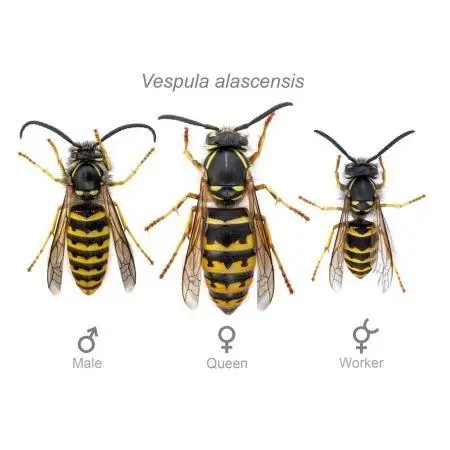
 The wasp life cycle of social wasps is built around a strict caste system, and each role has a dramatically different life expectancy. Here is the complete biological data:
| Wasp Type | Adult Lifespan | Key Biological Facts |
| Queen Wasp | Up to 12 months | Hibernates in winter, starts colony in spring ,only a seasonal survivor. |
| Worker Wasp | 12 – 22 days | Infertile female; burns out from foraging, building, and nest defense. |
| Drone (Male Wasp) | 15 – 25 days | The sole purpose is mating with new queens; it dies shortly after. |
| Solitary Wasp (e.g., Mud Dauber) | 3 – 6 weeks | No caste system; individual adults live briefly to lay eggs and hunt. |
| Egg → Adult (Total) | 35 – 70 days | Includes full progression through larval and pupal stages. |
| Wasp Indoors (Summer) | 2 – 5 days | Trapped workers die rapidly from dehydration due to the room temperature. |
Do Wasps Die After Stinging You?
Unlike honeybees, wasps do NOT die after stinging. Honeybees have barbed stingers that get stuck in human skin, pulling out their abdomen when they fly away. Wasps possess a smooth stinger that retracts easily. This means a single wasp can sting multiple times without shortening its wasp lifespan by a single day.
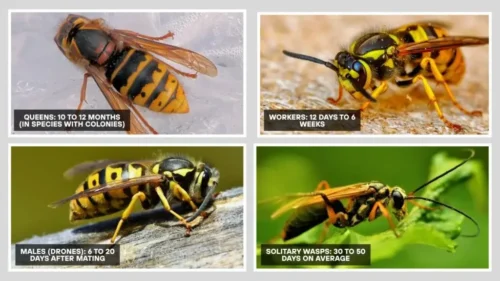
The wasps you see near your barbecue, or bins, are almost always worker wasps, infertile females whose entire existence is spent foraging, building the nest, and protecting the colony. Their bodies burn out fast due to continuous flight and metabolic stress:
Days 1–5: Emerges from pupa, begins indoor nest duties immediately.
Days 6–12: Peak foraging activity, maximum daily energy output.
Days 13–22: Physical deterioration begins; wings fray, and foraging slows down.
Day 22+: Natural death from physical exhaustion, predation, or early cold snaps.
Key Biological Fact: The queen’s pheromones chemically suppress worker fertility. If the queen dies, workers can develop ovaries within 2 weeks, but because they cannot mate, they can only produce unfertilized male (drone wasp lifespan) eggs.
Queen Wasp Lifespan: Up to 12 Months
The queen wasp’s lifespan is the longest in the colony by far. Unlike honeybee queens, who live 3–5 years, a queen wasp is replaced every single season. Each year, the old colony dies completely, and new queens start fresh.
Spring (April–May): Queen emerges from hibernation and builds a new nest from scratch.
Summer (June–August): Lays thousands of eggs while workers handle all manual labor.
Late Summer (August–September): Produces new fertile females (future queens) and drones.
Autumn (October): The old queen dies inside the nest as temperatures drop and food disappears.
Winter (Nov–March): New mated queens are the only survivors, in deep hibernation.
Drone (Male) Wasp Lifespan: 15–25 Days
Drones emerge strictly in late summer with one biological purpose: to mate with new queens from neighbouring colonies. They cannot sting because a stinger is a modified egg-laying organ (ovipositor), which males lack. Once mating is complete, their system shuts down, and they die. Any remaining drones in autumn are actively killed or locked out by worker wasps to conserve the colony’s dwindling food supply.
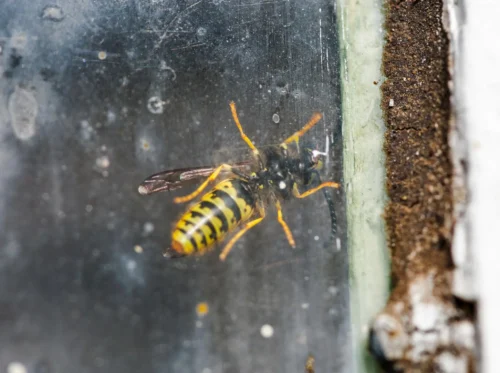
If a wasp enters your home and cannot escape, the wasp’s lifespan in house conditions depends entirely on the season and indoor temperature.
Summer Scenario (Trapped Workers): 2–5 Days
A trapped worker wasp typically dies within days indoors due to:
Dehydration: Indoors, stable room temperatures accelerate fluid loss. Without access to water or morning dew, they dry out within 48 hours.
Energy Depletion: Flying repeatedly into glass windows burns enormous energy reserves.
Winter Scenario (The Hibernating Queen): Months
Finding a wasp in the house in January is a completely different situation. This is almost certainly a hibernating queen wasp that hid in your attic, wall voids, or window frames in autumn. Your home’s internal heating falsely tricks her biology into thinking spring has arrived, causing her to wake up prematurely. If she stays in a warm room, she will burn through her stored body fat and die within a week. If she finds a cold, undisturbed spot, she can remain dormant for months.
How Long Do Wasps Live Without Food?
Worker wasps without food: 1–3 days before energy reserves are depleted.
Yellowjackets specifically: Up to 5 days due to slightly larger stored body fats.
Queen wasps are in hibernation: 5–6 months without feeding, relying strictly on stored fats in a low-metabolism state.
Starving out a wasp nest on an Ontario property owner’s find is not a viable strategy. Individual workers die quickly without food, but the queen continues producing hundreds of replacements daily throughout the summer.
Solitary Wasp Lifespan: Mud Daubers & Cicada Killers
Not all wasps belong to a colony. Solitary wasps do not have queens, workers, or social nests. An adult female solitary wasp lives for roughly 3 to 6 weeks. They spend their short adult life building small mud tubes or digging solo burrows, laying eggs, provisioning them with paralyzed spiders or insects, and dying naturally before winter. They are highly docile and rarely sting.
Why Are Wasps So Aggressive in August?
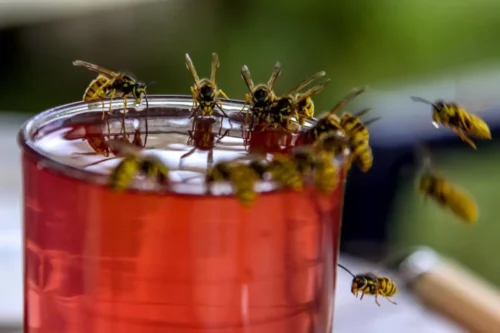
If wasps seem more aggressive in late July and August, it is a direct result of their ticking biological clock:
End of Lifespan: Most workers are in the final days of their 12–22-day lifespan and are physically deteriorating.
Dietary Shift: The queen stops producing larvae. Wasp larvae secrete a sugary droplet that feeds the workers. When larva production stops, workers lose their primary food source and experience “sugar crash” cravings, driving them to your sodas and food.
Colony Collapse: The social structure is breaking down, leading to erratic, defensive behavior.